Children's Books · Lake District
Warren Cabral
Lakeland Mysteries
The Feature
The Brief from Two Nieces That Changed Everything
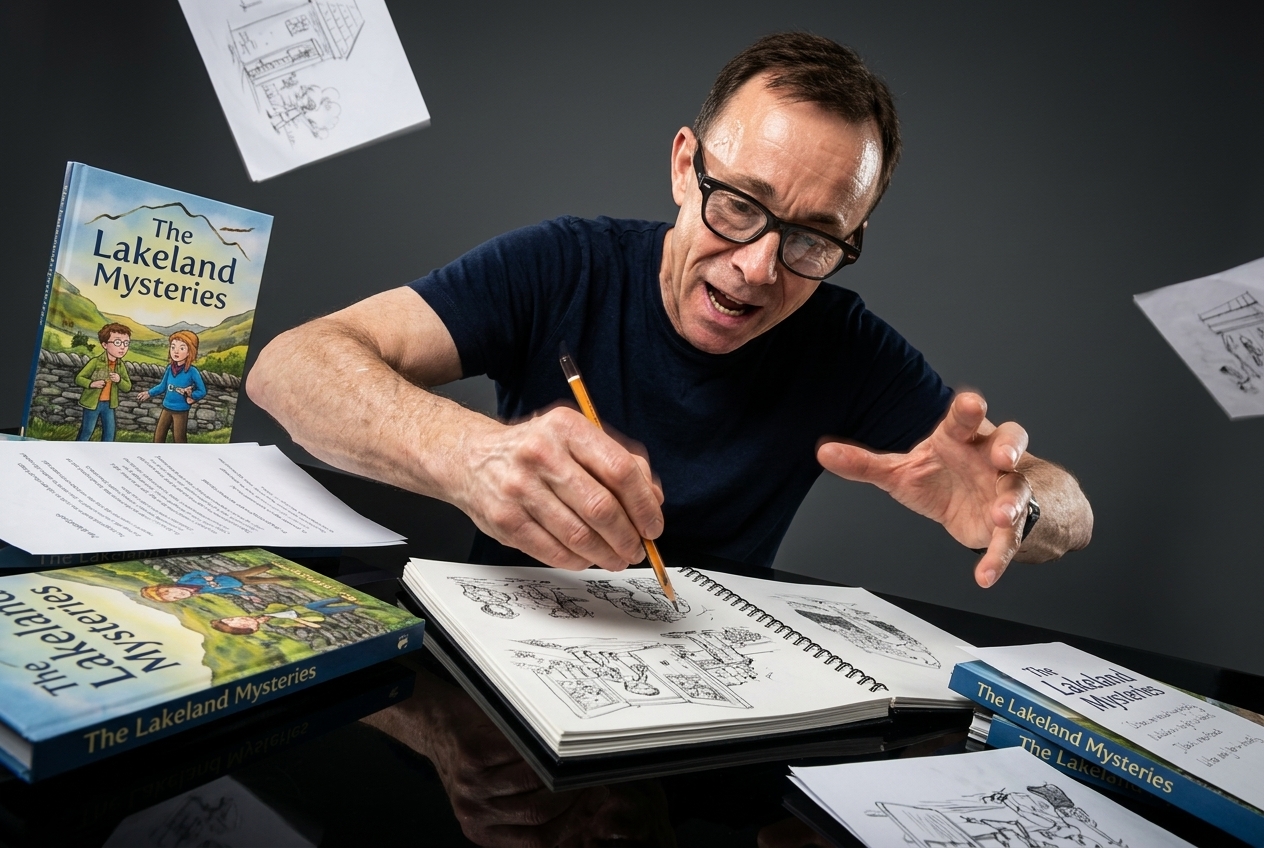
Warren Cabral spent thirty years as a barrister and a lifetime becoming a writer. His children's mystery series has found readers on four continents, and it started with a Christmas story.
There is a particular kind of discipline that comes from arguing cases for a living. You learn to read a room, construct a narrative, anticipate the counter-argument before it arrives. Warren Cabral spent three decades doing exactly that, first in Bermuda, then in London, a career built on the precision of language and the weight of consequence. None of it, on the face of it, points towards children's books.
And yet.
The origin story of *The Lakeland Mysteries* is, by any measure, a good one. Two nieces. A Christmas brief. A short story written to their exact specifications. 'They told me what they wanted,' Cabral has said, and you can hear the barrister's appreciation for a clear instruction in that. He delivered. They approved. Something shifted.
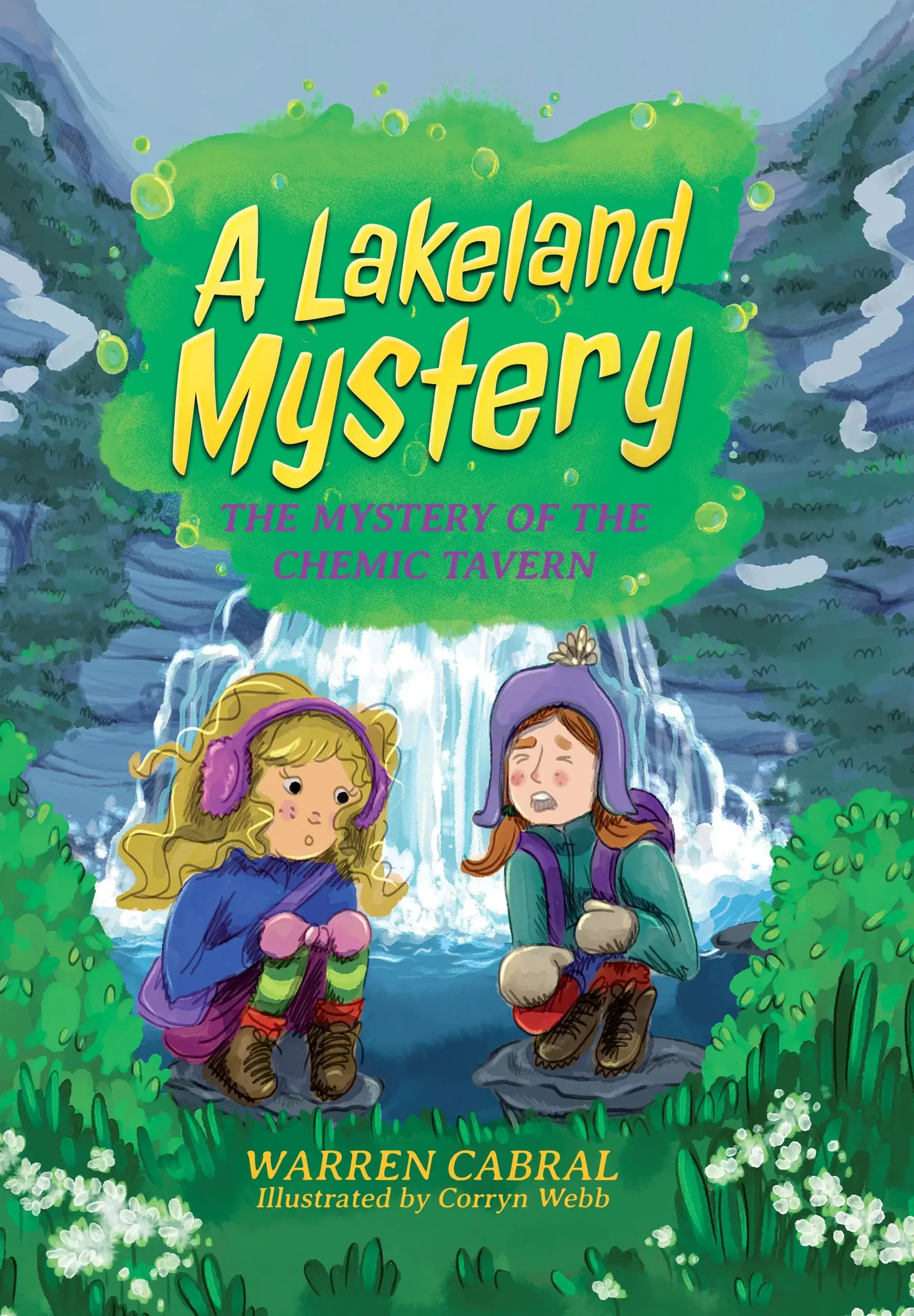
What followed was a series. Five illustrated novels now, each one following sisters Mae and Isla Donaldson, sharp, telepathic, and constitutionally incapable of leaving a mystery alone, as they unpick cold-case conspiracies, decode fell-side treasure trails, and surface secrets that have been buried for centuries. Their base is Cockermouth, their territory the fells, the lakes, the layered history of one of Britain's most storied landscapes.
'He told me what he wanted,' Cabral might say of the Lake District itself, because the landscape is not backdrop here. It is character.
The geography is real. The history is real. The Donaldson sisters are fiction, but they move through a world that rewards a reader who knows it and educates one who doesn't. That combination, fact-rooted adventure with enough imagination to carry you somewhere you've never been, is harder to pull off than it looks. Cabral pulls it off. Critics have reached for the Enid Blyton comparison, and it isn't wrong, but it undersells what the series is doing. Blyton's world was largely sealed. This one has depth, it has archaeology, it has the kind of texture you can only get from a writer who has spent time actually looking.
Cabral was born in Bermuda in 1960 and had his first byline at sixteen, as a reporter on *The Royal Gazette*. The instinct for story, then, preceded the law by some distance. Thirty years of legal practice didn't extinguish it. If anything, the skills transferred: character motivation, plot construction, the ability to hold a reader's attention when the facts are complicated and the stakes feel abstract. A courtroom is just drama with paperwork.
The readership that has gathered around *The Lakeland Mysteries* spans Zurich, California, Bermuda, British Columbia and well beyond. There is a fan forum. There are reader review pages, actively used. This is not a vanity project finding a polite audience. It is a series building something that compounds over time, the way the best children's series always do, because the children who love them tend to keep loving them.
What Cabral has understood, perhaps because he came to this late and deliberately, is that children's fiction is not a lesser form. The reader is harder to fool. You cannot pad. You cannot obscure a weak plot with impressive sentences. Every chapter has to earn the next one. The Donaldson sisters are compelling because Cabral has thought rigorously about who they are, what they want, why they see the world differently from the adults around them. That rigour is recognisably legal in origin. The warmth is something else entirely.
Five books in, the series is still gathering pace. New readers find it through the forum, through word of mouth, through the particular alchemy of a book being pressed into someone's hands with the words: *you have to read this*. For a series rooted in the fell country of Cumbria, it has travelled an extraordinary distance. Which is, when you think about it, exactly what a good mystery should do.
Advertisement
Cold Cases. Fell Secrets. Two Sisters.
The children's series that readers on four continents can't put down.
Warren Cabral spent thirty years arguing cases in courts of law. Now he argues them on the page. The Lakeland Mysteries follows Mae and Isla Donaldson, telepathic siblings with a gift for unravelling conspiracies buried deep in Cumbrian history. Five illustrated novels in, the series has gathered a reader community stretching from Zurich to British Columbia. Think Blyton, then forget Blyton entirely. These books are something new. Written for children, read by everyone.
Find your mystery today.The Interview
5 Questions with Warren Cabral
Thirty years in a courtroom, one Christmas story written for two very demanding nieces, and somehow here we are.
1. A Bermudian attorney writing illustrated children's mysteries set in the Lake District. How do you even begin to explain that at dinner parties?
I've stopped trying. The short version is that my nieces gave me a brief, I delivered, and then I couldn't stop. The longer version involves thirty years of reading people across a courtroom and realising that character is character, whether you're cross-examining a witness or writing a ten-year-old who can read her sister's thoughts on a rainy fell.
2. Mae and Isla are telepathic sisters who solve cold cases. Where did that particular combination come from?
The telepathy was the nieces' idea, not mine. They were very clear about what they wanted. I just thought, if two sisters can share thoughts, the arguments about who gets credit for solving the mystery become genuinely interesting. That sibling friction is where a lot of the comedy lives.
3. Readers on four continents have found the series. Does that still surprise you?
Honestly, yes. I grew up in Bermuda reading Enid Blyton and feeling perfectly at home in the English countryside without ever having set foot there, so I should have known geography was no obstacle. But there's still something quietly astonishing about a message from a reader in California who knows Cockermouth's history better than most people who drive through it.
4. The law and fiction writing. More overlap than people might expect?
Far more. A case is a story with evidence, stakes and an audience you have to persuade. You learn very quickly that the facts alone are never enough. How you sequence them, where you put the tension, when you let things breathe. I use all of that now, just without the billing rate.
5. Five books in. What does the series still have left to say?
The Lake District has centuries of secrets and I've barely scratched the surface. Mae and Isla are growing up book by book, which means the cases can grow with them. I have no intention of stopping while there are readers building forum threads about plot theories I haven't even written yet.
More Lakeland Mysteries in this issue