Fintech · Yorkshire
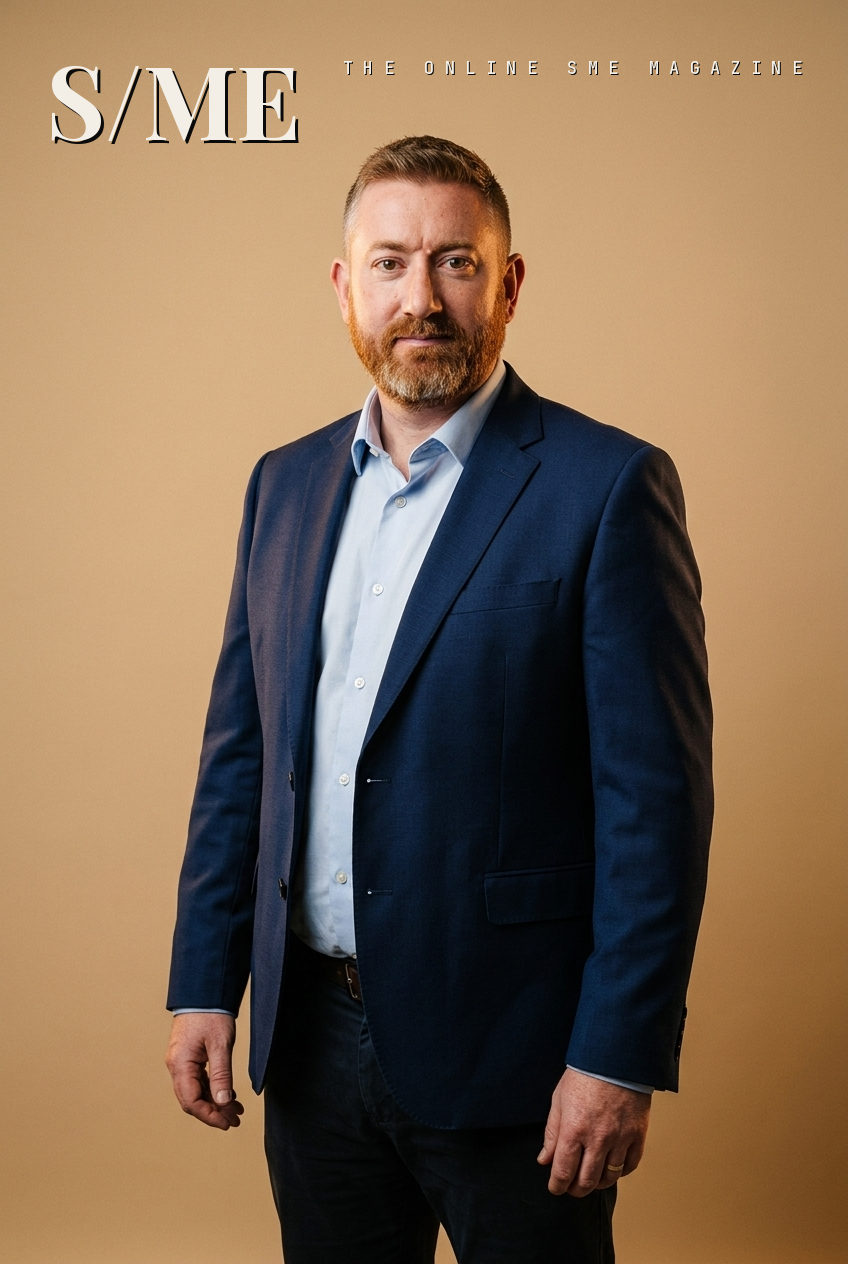
David Murphy
Dojo
The Feature
The Man Who Makes Paying Easy
David Murphy has built a career on knowing exactly what businesses need before they do. Now, as the human face of Dojo's payment technology across Yorkshire and beyond, he's turning one of the driest corners of commerce into something genuinely worth talking about.
There is a particular kind of frustration that visits every business owner at the worst possible moment. The queue is long, the Wi-Fi has dropped, the card machine is blinking an error code nobody understands, and a customer who was about to spend sixty pounds is already reaching for the door. It is mundane, infuriating and entirely avoidable. David Murphy has made it his business to make sure it never happens.
Murphy's route to fintech is not the obvious one. Before he landed at Dojo, he spent years selling across construction, food manufacturing, security and cosmetic dentistry. Each sector a different language, a different set of pressures, a different definition of what counts as a problem worth solving. It is that breadth, rather than any narrow specialism, that makes him genuinely useful in a room full of business owners. He has seen enough of the coal face to know what stress looks like, and smart enough to know that a payments conversation is rarely just about payments.
'Ask him about card machines and you'll get a straight answer,' goes the general consensus among those who've dealt with him. 'Ask him about growing a business and you'll get a proper conversation.' That distinction matters more than it sounds. The fintech space is crowded with reps who know their product sheets and not much else. Murphy is the kind of operator who turns up already having thought about your situation.
'Every UK business that takes card payments deserves straight answers, proper support and a setup that actually works. That's not a pitch. It's just the minimum.'
At Dojo, he operates as a one-person bridge between a sophisticated technology platform and the very human reality of running a business. Dojo's card machines are built for speed, with processing times that sit at the quick end of the industry, and backed by 4G connectivity that kicks in automatically if a venue's Wi-Fi falters. For a busy restaurant on a Saturday night or a market trader on a gusty Tuesday morning, that is not a minor technical detail. That is the difference between a clean day and a chaotic one.
Beyond the hardware, the platform carries real weight. Transaction insights, clear billing, consolidated reporting: the kind of financial visibility that saves hours at the end of the month and, more importantly, surfaces patterns that help owners make better decisions. Murphy walks clients through all of it, from first conversation to final setup, and stays on hand long after the machine is plugged in and the receipts are printing.
For businesses thinking about switching from an existing provider, the usual deterrents, setup costs, onboarding fees, the general faff of transition, don't apply here. Dojo covers those switching costs in full. It is the sort of practical gesture that signals confidence: the technology sells itself once it's in, so the barrier to getting there should be as low as possible.
Murphy serves clients across hospitality, retail, the trades and a wide spread of sectors in between. Geography is rarely a real limit. The nature of his work means he operates wherever the conversation is, and his reputation for straight-talking, post-sale availability has built him a network that reaches well beyond any single postcode.
He has been recognised as an award-winning salesperson within Dojo, though he is not the type to lead with trophies. The metric he seems to care about more is whether a client rings him six months later with a question, which they do, which tells you something.
Payment infrastructure is, objectively, unglamorous territory. Murphy's particular gift is making it feel like the obvious thing you should have sorted out already, and making the process of sorting it out feel painless. In a category full of noise and small print, that is rarer than it ought to be.
Advertisement
Your card machine is costing you more than you think
Meet the Dojo rep who actually gets it.
Slow terminals, dropped connections, billing you can't decode. Every business taking card payments is quietly losing something, whether that's time, customers or money. David Murphy has run businesses, led sales teams across half a dozen industries and yes, he's been the frustrated merchant watching a card machine fail during a Friday rush. Now he brings that hard-won perspective to Dojo, helping UK businesses get faster, more reliable payment technology with zero jargon and real one-to-one support. Switching costs covered. Setup handled. Someone you can actually call.
Start the conversation todayThe Interview
5 Questions with David Murphy
David Murphy spent years running recruitment businesses and leading big sales teams before redundancy handed him an unlikely gift: the chance to build something entirely on his own terms. Now, as a Dojo partner operating across Yorkshire and beyond, he's doing payments his way, with the battle scars, the golf handicap and the philosophy to match.
1. You went from running recruitment businesses to selling card machines. What on earth happened?
Redundancy, basically, though I'd reframe that as opportunity. Everything I'd done up to that point had been about finding solutions, developing people and helping businesses grow. When I looked at what was next, I wanted something where I was in control: who I worked with, which industries I got involved in, which customers I chose to sign up. Dojo felt right because it matched that commercial ambition but also had a genuine commitment to the customer side of things, making sure businesses get the best technology and support possible. It wasn't a leap into the unknown so much as a logical next chapter.
2. You became Dojo's number one salesperson in the UK for new sign-ups after just two months. How does that even happen?
Honestly, I think it comes down to one thing: people buy from people. I've run businesses, I've been a merchant myself and I know exactly what it feels like when the card reader packs in on a busy Saturday, or when you can't get a human being on the phone and customers are queuing. That perspective changes how you sell. I wasn't trying to shift boxes, I was trying to solve real problems. The award was a nice moment, but what it actually told me was that a lot of people out there were ready to switch, and they just needed to trust that the person in front of them actually got it.
3. There's a widespread assumption that all payments reps are just chasing commission. Is that fair?
I understand why people think that, and some of them have probably earned that reputation. My view is simple: I'm happiest last. The customer has to be happy with the deal, Dojo has to be satisfied the business meets the right criteria, and only then do I get paid. If I don't solve a customer's actual problem, I don't win the business, so understanding their frustrations isn't some soft sales technique, it's the entire job. The bee doesn't waste time trying to convince the fly that honey is better. Some businesses are ready for this conversation and some aren't, and I've made peace with that.
4. Who are you actually trying to reach, and what does working with you get them?
Any business owner who processes card payments and has never really sat down to think about what it's costing them or whether their setup is actually working hard enough. That's more companies than you'd expect. A lot of people are running on old tech, paying fees they've never questioned, with EPOS systems that frankly frustrate their staff and slow down their customers. I work across sectors, I deliberately haven't gone narrow, because the core problem is the same almost everywhere. My job is to look at the whole picture: cost, technology, efficiency, and what a better setup would actually mean for the day-to-day running of their business.
5. What's the single thing you know now that you wish someone had told you at the start?
That not everyone is going to be as interested in merchant services as you are, and that's completely fine. Early on you want to convince people, to get them across the line, and sometimes you push when you should step back. Now I let people come to me when the timing is right for them, which is usually when their existing tech lets them down or they open a statement and spot a price increase they weren't expecting. Patience sounds boring but it's genuinely one of the most useful things you can develop in this business.