Profile · Member Feature
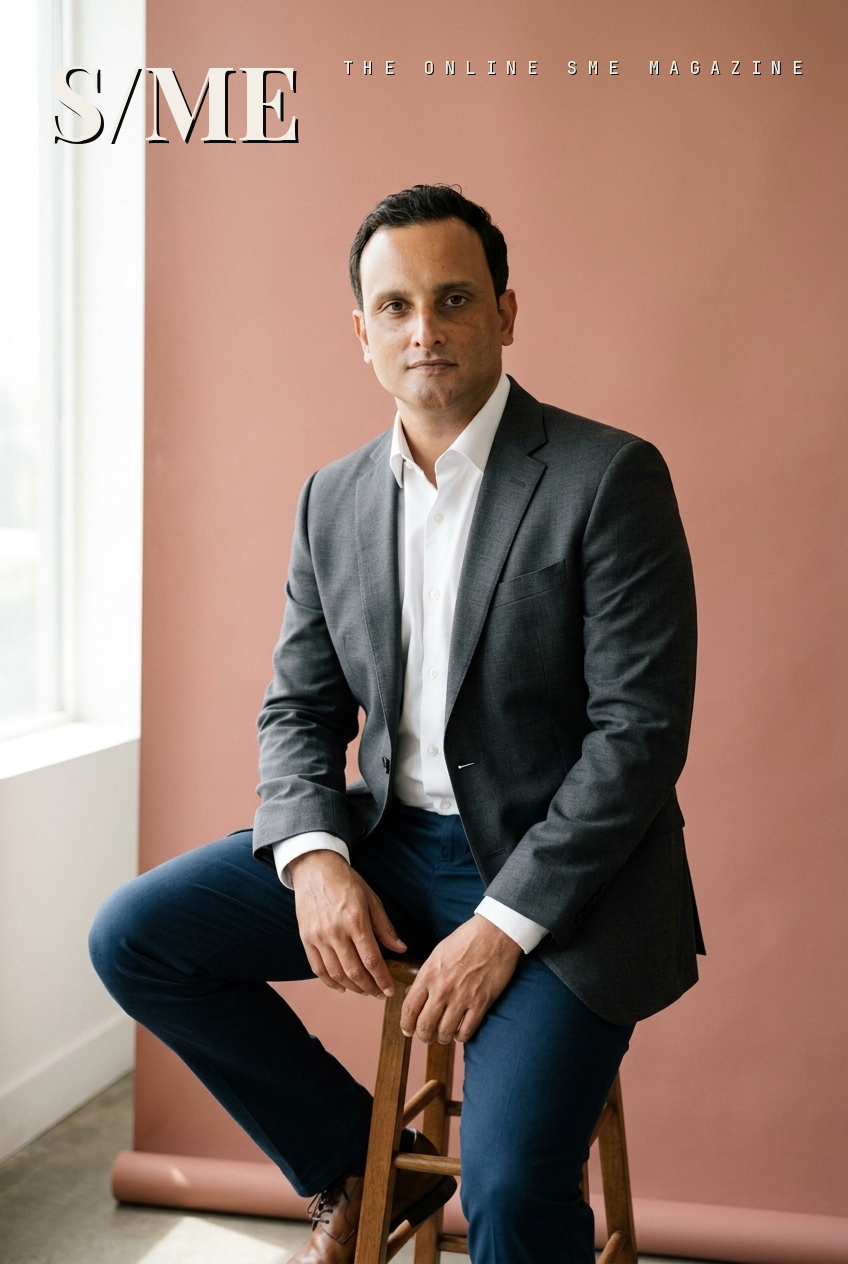
Ben Abrahams Is Quietly Rewiring How London Gets Paid
From Fulham, fintech founder Ben Abrahams and Paify LTD are building something the City's glossiest towers haven't managed: financial technology that actually works for the people running the city.
By S/ME
There is a particular kind of London founder who doesn't announce himself. No TED talk clip doing the rounds, no profile picture taken on a rooftop in Shoreditch. Ben Abrahams is that kind of founder. He works out of Fulham, which tells you something already. Not the performative chaos of East London's startup scene, not the pinstriped gravity of the Square Mile. Fulham: purposeful, a little underestimated, quietly getting on with it.
Abrahams is the man behind Paify LTD, a fintech business that sits at the intersection of two things London does simultaneously better and worse than anywhere else on earth: moving money, and making it needlessly complicated for the people who actually need to move it.
The premise, when you hear it, has the satisfying logic of something that should have existed already. Small business owners, freelancers, sole traders, the people who are, in any meaningful sense, the connective tissue of this city's economy, have long been handed financial tools designed for someone else. The infrastructure was built for corporations. The interfaces were built for patience no working person actually has. Paify is Abrahams' answer to that gap.
'I kept watching brilliant people spend time on things that should take seconds,' he says. The observation is simple. The solution is not.
Building in fintech means navigating a regulatory environment that has a talent for humbling the overconfident. Compliance, licensing, the particular demands of handling other people's money at scale, these are not problems you solve with a good pitch deck and a round of applause at a demo day. They require a different kind of stubbornness. The patient, technical, slightly obsessive kind.
'The infrastructure was built for corporations. The interfaces were built for patience no working person actually has.'
Abrahams has that stubbornness. You sense it in the way he talks about the business: precise, unshowy, with the occasional flash of genuine excitement when the conversation turns to what comes next rather than what already exists. He is more interested in the problem than in being seen to have solved it, which in London's founder culture is either a liability or a superpower, depending on the week.
Fulham, for its part, suits the operation. The borough occupies a strange, productive middle ground in London's geography, close enough to the money in Mayfair and Chelsea to understand what serious business looks like, far enough from the noise to actually build something. There are worse places to think clearly.
What Paify is constructing, piece by piece, is a payments and financial management infrastructure that treats small business owners as the sophisticated operators they actually are, rather than the afterthought they've traditionally been to the major banks. The details of the product continue to evolve, that's the nature of fintech, where the landscape shifts under your feet even as you're laying foundations, but the animating idea holds steady. Make the financial layer of running a business less of an obstacle and more of an asset.
The broader context matters here. London's small business community contributes something extraordinary to the city, in tax, in employment, in the sheer texture of daily life. Every decent independent restaurant, every specialist retailer on a good high street, every courier and consultant and creative studio is a small business with a bank account and a cash flow problem and an invoice that's running three weeks late. Fintech, at its best, exists to serve those people. Paify, at its best, is trying to do exactly that.
Abrahams won't tell you he's changing the world. That's not the register he operates in. But sit with him long enough and you start to understand that the quiet founders, the ones working in Fulham rather than performing in public, are often the ones who actually do.



This feature was created for an S/ME member
Your business could be next →Keep reading

Business
The Freelance Marketing Expert Big Brands Call When Things Need Fixing
Jonathan Clarke · JDCC

Spotlight
The Lawyer Who Learnt to Listen: How Larissa Hawkins Is Rewriting the Rules of Career Coaching
Larissa Hawkins · GlassFrog

Services
LeaseAssured Is Making the Commercial Lease the Smartest Thing You'll Sign
Daniel Yeo · LeaseAssured

Interview
5 Questions with Claire Martin
Claire Martin · L’Atelier de Claire