Hospitality · Editorial
Last Orders Cancelled: The Pub Isn't Dead Yet
With a landmark rates cut locked in for April 2027 and a two-year freeze already buying time, Britain's pubs and live music venues have something they haven't had in years: a reason to plan.
By S/ME
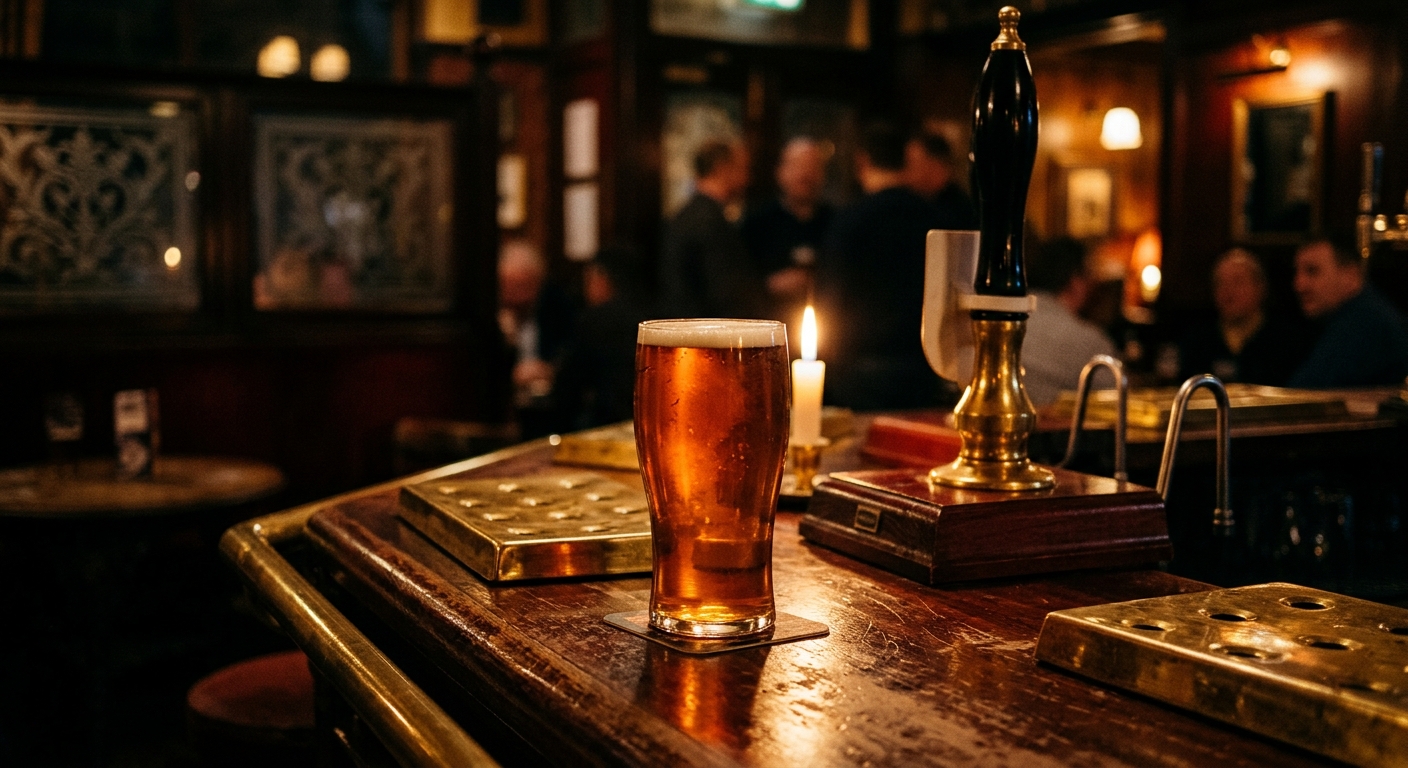
There is a moment, somewhere around the third pint, when a good pub stops being a building and becomes something harder to define. It is the hum of a Tuesday night band nobody's heard of. The landlord who remembers your order. The sticky carpet that has absorbed thirty years of local history. For a decade, that feeling has been dying by a thousand cuts: sky-high business rates, energy bills arriving like ransom notes, footfall that never quite recovered after Covid. But something has shifted.
In a move that surprised even seasoned industry lobbyists, the government confirmed that from April 2027, pubs and the majority of live music venues will benefit from a 20 per cent reduction in business rates. This sits on top of a two-year rates freeze already in place for the broader hospitality sector. Taken together, it is the most substantial structural support the trade has seen in a generation.
Whether this helps is not really in doubt. What matters now is what Britain's venues actually do with the next 18 months.
The Breathing Room Nobody Expected
Business rates have long been the industry's sharpest grievance. Unlike income tax, they arrive regardless of whether you are profitable. A pub in a mid-sized market town pays rates calculated on its property's rateable value, a figure that has felt increasingly untethered from economic reality. The freeze, already active, stopped the bleeding. The 2027 cut is the stitches.
For operators sitting on thin margins, the arithmetic matters. A 20 per cent reduction on a meaningful rates bill can be the difference between absorbing a bad January and being destroyed by one — capital that can be redirected towards a new sound system, a cellar refit, or a member of staff who might otherwise have been a luxury.
The hospitality sector has spent years arguing that it is taxed as though it were a supermarket anchor tenant rather than a community asset with social value that no algorithm can quantify. This policy, at least partially, concedes that point.
'The next 18 months are a runway. What operators build on it will define who's still standing in 2030.'
What Smart Operators Are Doing Right Now
The venues that will benefit most from 2027 are the ones making decisions today. Waiting until the cut lands is a strategy for people who've never tried to book a contractor in December.
Savvy pub and venue operators are using the certainty of future savings to go to lenders and investors with something concrete. A confirmed reduction in fixed costs changes a business plan, making refurbishment financing easier to justify, lease renegotiations easier to open, and staffing investments easier to defend to a sceptical bank manager.
There is also programming to consider. Live music venues are creatures of reputation and they build that reputation slowly, night by night, act by act. Venues that use this window to lock in artist relationships, grow mailing lists and invest in the experience rather than just the fabric of the building will be the ones that matter when the cut arrives. Those that simply coast will pocket the saving and wonder why the crowds didn't follow.
Independents have an additional card to play. Compared to chain operators running identical experiences in thirty towns simultaneously, the local pub and the independent venue can be specific, strange and genuinely irreplaceable. That distinctiveness is an asset the rates system couldn't price, but audiences absolutely can.
The Risks That Don't Go Away
None of this should be read as a rescue. Business rates are one cost among many, and the others haven't softened. Staffing remains the biggest line on most hospitality P&Ls. Energy costs, whilst less volcanic than in 2022 and 2023, are not gentle. And consumer spending, even as confidence gradually recovers, is being allocated with more deliberateness than before. People still go out, but they are simply more selective about where.
There is also the structural challenge of drinking culture itself, particularly among younger adults, where moderation and sobriety are trends with real momentum. Venues that have already diversified — through food, events, community programming or non-alcoholic offerings — are better positioned than those still running a 2015 operation in a 2025 market.
The 20 per cent cut will not automatically lift every boat. Some boats have holes in them.
The Locals Worth Saving
Britain's best pubs and venues are civic infrastructure dressed in beer-stained wood. They host first dates and wakes and band rehearsals and local elections. The economic case for protecting them has always been obvious to anyone who has ever used one. It has taken policymakers longer to arrive at the same conclusion.
April 2027 is far enough away to plan for properly and close enough to build towards with genuine urgency. For the operators who treat this as a starting gun rather than a finish line, the next era of the British local might be considerably more interesting than the last.


Keep reading

Spotlight
LeaseAssured Explains When a Small Business Should Involve a Commercial Lease Solicitor
Daniel Yeo · LeaseAssured

Wellbeing
Hold the Line: How to Actually Mind Your Head Through November
Jolene Ironside · Heart In Mind

Interview
5 Questions with Juliet Fisher
Juliet Fisher · Juliet Fisher Creatives

Spotlight
Strategy, Not Vanity: The Quiet Power of Tracy Dixon
Tracy Dixon · The Marketing Depot Limited