
Culture · Editorial
Your High Street Is Not Dying. It Is Deciding.
With national chains retreating and independents quietly moving in, Britain's high streets aren't in decline, they're in the middle of a very deliberate edit.
By S/ME
Walk down almost any British high street on a Tuesday morning and you will see two stories happening at once. On one side: the whitewashed windows, the 'To Let' boards, the faint ghost of a Topshop logo still visible through the paint. On the other: a coffee shop that roasts its own beans, a tailor who knows your name, a bookshop that hosts poetry nights and sells out of the good stuff before it hits Amazon. The chains are leaving. The independents are arriving. And the streets where this swap is happening fastest are, quietly, becoming the most interesting places in Britain to spend a Saturday.
This is not a coincidence. It is a correction.
The Great Retreat
The numbers behind the closures are well-documented at this point, but what gets less attention is the spatial reality of what gets left behind. When a national chain exits a high street, it doesn't just leave a gap in the retail mix. It leaves a large, often purpose-built unit, a fractured footfall pattern and, crucially, a psychological dent. Empty shops read as failure, even when the story is more complicated than that. The chain didn't fail because the street failed. It failed because the model failed: the centralised buying, the indistinguishable product, the loyalty to the retail park over the town centre.
What the multiples understood about high streets was footfall mathematics. What they never quite grasped was belonging.
'The chains optimised for scale. The independents optimise for the person standing in front of them. Those are genuinely different businesses, and it turns out one of them builds a community and one of them doesn't.'
The independents now filling these gaps are not naive about commerce. Many of them are sharper operators than the brands they've replaced, precisely because they cannot afford not to be. They know their margins, they know their regulars, and they know that the experience of being inside their shop has to be worth the detour from a phone screen. That is a very high bar, and meeting it consistently is what separates the survivors from the optimists.
What the Clusters Know
Something interesting happens when a critical mass of independents settles on the same street. The whole thing starts to behave differently from a conventional retail strip. People don't come with a list. They come with time. They browse one shop and discover another. They linger. A good independent cluster doesn't compete with a retail park, it offers something a retail park structurally cannot: the feeling that this place was made by people who actually care what it becomes.
Curation is the word that keeps surfacing when you talk to the people running these streets, though they rarely use it themselves. What they say instead is things like 'we try to refer to each other' or 'we did a late-night together before Christmas and it was packed'. The collaboration is informal but deliberate, and it generates a kind of collective loyalty that no loyalty card scheme has ever replicated. You don't go back to a retail park because it moved you. You go back to a street of independents because the woman in the cheese shop remembered what you bought last time.
Experience Over Transaction
The other thing the survivors understand, almost universally, is that the physical shop has to justify its physical existence. That sounds obvious. It isn't. For years, retail strategy was about bringing the warehouse to the customer as efficiently as possible. The independents who are thriving have inverted that logic entirely. They are not trying to compete with next-day delivery on price or convenience. They are offering something delivery cannot: the texture of a real interaction, the ability to hold the thing before you buy it, the unexpected conversation that sends you home with something you didn't know you needed.
Some of them have started hosting events. Others are building genuine communities around newsletters, workshops, club nights attached to the shop's identity. The bookshop becomes a venue. The deli becomes a cooking school. The boundaries of what a shop is allowed to be are being quietly redrawn, and the high streets where this is happening have a particular energy that is genuinely difficult to manufacture.
The Street That Chose Itself
Britain's best high streets right now are not the ones with the most footfall or the longest opening hours. They are the ones where someone, at some point, made a decision about what kind of place this was going to be and held that line. Sometimes that someone is a landlord who kept the rents liveable. Sometimes it's a business improvement district that actually did something. More often, it's just a handful of shop owners who liked each other and decided to act like it.
The high street is not dying. It is, slowly and unevenly and with considerable effort, deciding what it wants to be when it grows up. In the places where it has made that decision, it is more alive than it has been in years. Go and find one. It is worth the trip.
Keep reading

Business
The Freelance Marketing Expert Big Brands Call When Things Need Fixing
Jonathan Clarke · JDCC

Spotlight
The Lawyer Who Learnt to Listen: How Larissa Hawkins Is Rewriting the Rules of Career Coaching
Larissa Hawkins · GlassFrog
Services
LeaseAssured Is Making the Commercial Lease the Smartest Thing You'll Sign
Daniel Yeo · LeaseAssured
Interview
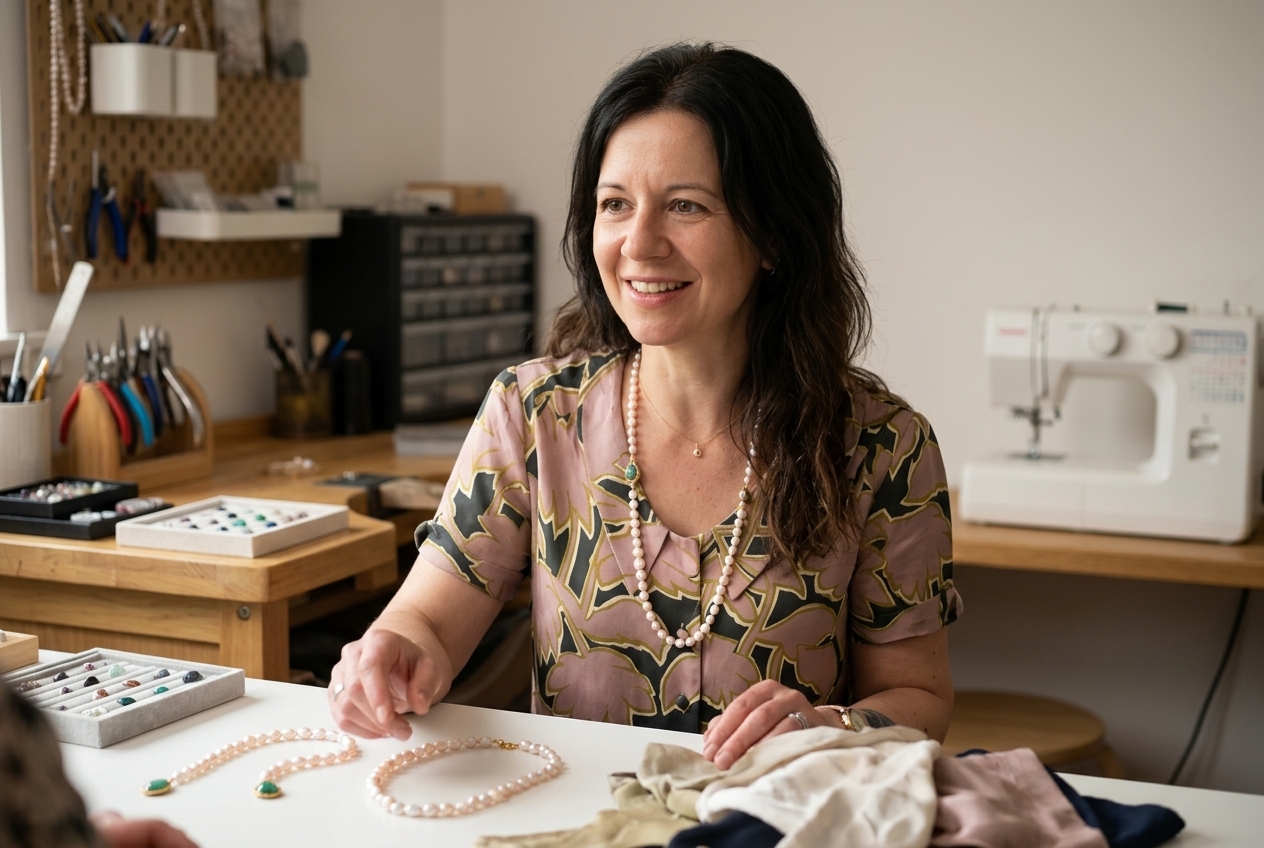
5 Questions with Claire Martin
Claire Martin · L’Atelier de Claire